Knex Helicopter Instructions: A Comprehensive Guide
Embark on a building adventure! This guide details constructing Knex helicopters, including the Sonic Boom model. Explore assembly, stability enhancements, and troubleshooting,
plus customization options and integration with Knex roller coaster sets.
Knex helicopters offer a fantastic entry point into the world of engineering and physics for builders of all ages. Unlike pre-built models, constructing a Knex helicopter fosters problem-solving skills and a deeper understanding of aerodynamic principles. The Knex Sonic Boom helicopter, frequently referenced in building guides, exemplifies this, often bundled with other exciting sets like roller coasters, satellites, and drones.
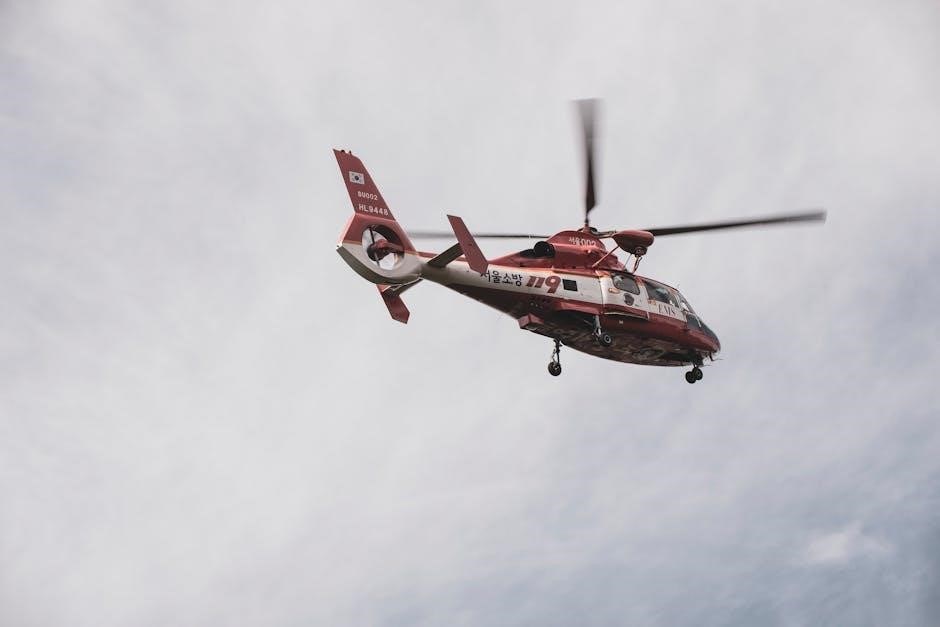
These models aren’t just about aesthetics; they demonstrate core concepts like lift, drag, and thrust. Successfully building a functional Knex helicopter requires careful attention to detail, precise connections, and a grasp of structural integrity. The inherent flexibility of the Knex system allows for experimentation and customization, encouraging builders to modify designs for improved performance or unique aesthetics.
Beyond the fun of construction, exploring Knex helicopters can lead to an appreciation for real-world aviation. Understanding how rotor blades generate lift, or the purpose of a tail rotor, translates directly to knowledge of full-scale helicopters. This makes Knex helicopters an engaging and educational building experience.
Understanding the Knex Sonic Boom Helicopter Model
The Knex Sonic Boom Helicopter is a popular and relatively complex build, often included within larger Knex building sets. It’s known for its dynamic design and, when properly constructed, a surprisingly stable flight capability. This model typically features a robust fuselage, precisely angled rotor blades, and a functional tail rotor – all crucial for achieving balanced lift and controlled rotation.
Understanding the Sonic Boom’s construction requires recognizing the interplay between its components. The fuselage provides the structural foundation, while the rotor blades generate the upward force needed for flight. The tail rotor counteracts the torque created by the main rotor, preventing the helicopter from spinning uncontrollably. Careful alignment of these parts is paramount.
Many online resources and guides detail the Sonic Boom’s assembly, often highlighting potential pitfalls. Common challenges include ensuring secure connections between the Knex pieces and achieving the correct blade pitch. Mastering these aspects is key to unlocking the model’s full potential and enjoying a rewarding building experience.
Required Knex Pieces for Helicopter Construction
Building a Knex helicopter, particularly the Sonic Boom model, demands a specific assortment of pieces. Connectors are fundamental – various types (2-way, 3-way, 5-way) form the structural backbone. Rods, in diverse lengths, create the frame and support systems. Expect to utilize a substantial quantity of grey and white pieces, typical of many Knex sets.
For rotor blade construction, flat, wing-like pieces are essential, alongside connectors to attach them to the central rotor hub. The tail rotor requires similar, albeit smaller, components. Landing skids necessitate angled connectors and rods for stability. Specialized pieces, like those creating a smooth nose cone, may also be included;
While a complete building set often contains everything needed, individual builds may require sourcing specific parts. Checking online inventories or utilizing existing Knex collections is advisable. Having a spare assortment of common connectors and rods is always beneficial for replacements or modifications during the construction process.
Step-by-Step Assembly: Fuselage Construction
Begin with the helicopter’s core frame. Connect several long grey rods using 5-way connectors to establish the primary fuselage length. Reinforce this structure with shorter rods and 3-way connectors, creating a rectangular base. This forms the foundational shape of the helicopter body.
Gradually build upwards, adding layers of rods and connectors to define the fuselage’s curvature. Utilize angled connectors to achieve a sloping nose. Pay close attention to symmetry; an uneven frame impacts stability. Secure all connections firmly, ensuring a robust structure capable of supporting the rotor system.
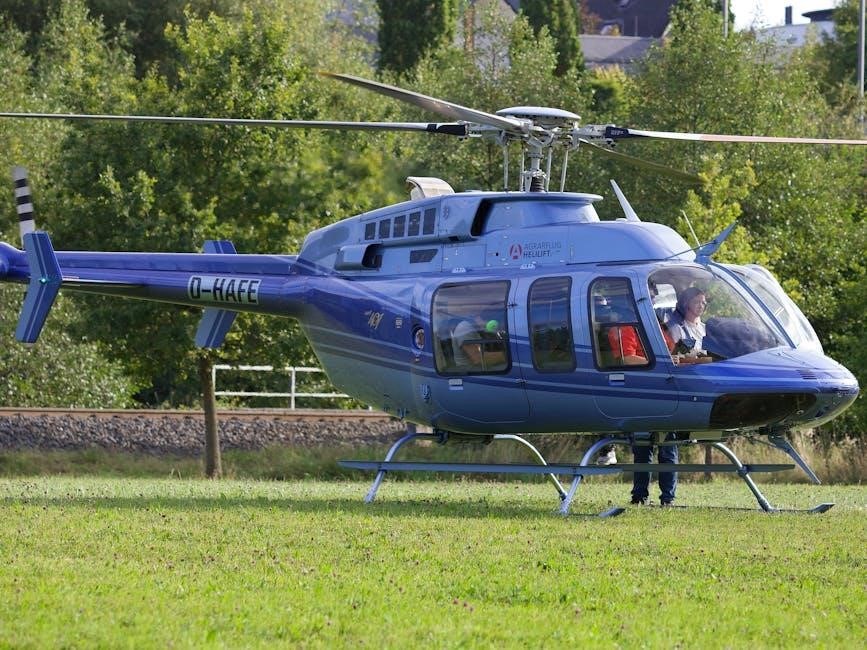
Incorporate white pieces to add detail and visual appeal. Consider leaving space within the fuselage for potential internal mechanisms or a cockpit area. Regularly test the frame’s rigidity throughout construction. A solid fuselage is crucial for successful helicopter operation and prevents mid-flight disassembly.

Step-by-Step Assembly: Rotor Blade Attachment
Constructing the rotor hub is paramount. Utilize a central, rotating connector – often a yellow or orange piece – as the attachment point for the blades. Securely fasten this hub to the top of the completed fuselage, ensuring free rotation without excessive wobble. This is the core of the helicopter’s lift generation.
Create the rotor blades themselves using a combination of long, flexible rods and angled connectors. Aim for symmetrical blade designs; imbalances cause instability during flight. Attach each blade to the rotor hub using connectors that allow for slight articulation, mimicking real helicopter blade movement.
Reinforce the blade attachments with additional connectors to prevent detachment during operation. Test the rotor’s spin by hand, checking for smooth rotation and balanced weight distribution. Adjust blade angles slightly to optimize lift. A well-constructed rotor system is vital for achieving sustained flight.
Step-by-Step Assembly: Tail Rotor Installation
Counteracting torque is key! The tail rotor prevents the helicopter body from spinning uncontrollably due to the main rotor’s force. Begin by constructing a tail boom – a rigid extension from the rear of the fuselage – using sturdy Knex rods and connectors. Ensure it’s securely attached and aligned with the helicopter’s central axis.
At the end of the tail boom, build a smaller rotor hub, mirroring the design of the main rotor hub but on a reduced scale. Attach smaller rotor blades to this hub, again prioritizing symmetrical construction for balanced performance. Use flexible rods to allow for slight blade articulation.
Carefully position the tail rotor assembly to provide the necessary counter-torque. Experiment with blade angles to fine-tune stability. A properly installed tail rotor is crucial for controlled hovering and directional movement. Test the entire system by manually spinning the main rotor and observing the tail rotor’s reaction.
Step-by-Step Assembly: Landing Skid Creation
Ensuring a stable touchdown! Landing skids provide a stable base for your Knex helicopter, preventing tipping during landings. Begin by constructing two identical skid structures using a combination of Knex rods, connectors, and potentially, flexible pieces for shock absorption. A ‘V’ shape generally offers good stability.
Reinforce the skids with crossbeams to distribute weight and prevent bending under pressure. Attach the skids to the underside of the fuselage, ensuring they are symmetrically positioned and securely fastened. Consider angling the skids slightly outwards for increased stability on uneven surfaces.
Experiment with different skid lengths and designs to optimize performance. Longer skids offer greater stability but may increase the overall size of the helicopter. Shorter skids are more compact but may be less stable. Test the landing skids by gently setting the helicopter down on a flat surface, observing its balance and stability.
Advanced Building Techniques for Enhanced Stability
Beyond basic construction! Achieving optimal flight stability requires advanced techniques. Implement triangulation within the fuselage structure – connecting rods diagonally – to significantly increase rigidity and resist twisting forces during rotor operation. Utilize flexible Knex pieces strategically to absorb vibrations and reduce wobble.
Pay close attention to weight distribution. A balanced helicopter flies more predictably. Position heavier components, like motors (if used), closer to the center of gravity. Reinforce connection points with multiple connectors to prevent loosening during flight. Consider using rubber bands or similar materials to dampen vibrations between rotating and stationary parts.
Experiment with different rotor blade designs and pitch angles. Fine-tuning these elements can dramatically improve lift and control. Regularly inspect your helicopter for loose connections and structural weaknesses, addressing them promptly to maintain stability and prevent mid-air failures.
Troubleshooting Common Building Issues
Encountering problems? A frequent issue is rotor imbalance, causing excessive vibration. Ensure all blades are identical in length and weight, and securely attached. If experiencing connection timeouts (a Knex module issue), verify your database connection settings and ensure the database server is running and accessible.
Loose connections are another common culprit. Regularly check all joints and reinforce them with additional connectors. If the helicopter fails to lift, examine the rotor blade pitch – it may be insufficient. Conversely, excessive pitch can strain the motor or structure.
For database-related errors (relevant to Knex querying), double-check your SQL syntax and table/column names. Node version compatibility can also cause issues; recent updates might introduce breaking changes. If using Knex with PostgreSQL, connection pool exhaustion can occur – increase the pool size if necessary.
Knex Helicopter Customization Options

Unleash your creativity! Beyond the standard build, Knex helicopters offer extensive customization. Experiment with different rotor blade designs – longer blades increase lift, while angled blades alter flight characteristics. Add aerodynamic elements like wings or stabilizers for improved control and stability.
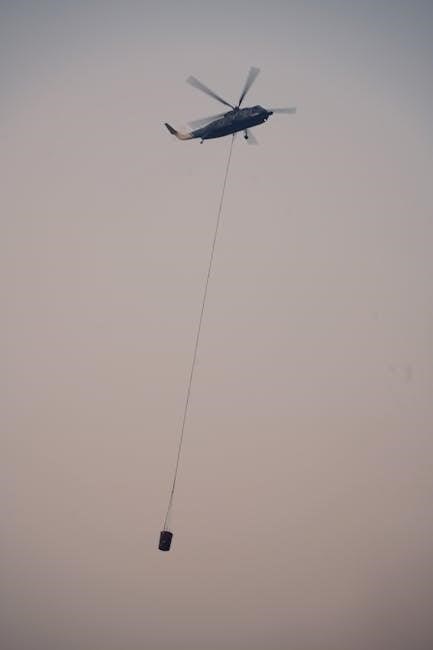
Enhance the visual appeal with custom color schemes and decorative elements. Integrate lighting using small LEDs for nighttime flights. Consider adding a functional winch system using Knex gears and string for rescue missions or cargo transport.
For advanced builders, explore modifying the tail rotor to adjust yaw control. You can also experiment with different fuselage designs to optimize weight distribution and aerodynamics. Don’t be afraid to combine parts from other Knex sets – a satellite defense vehicle’s components could add unique features! Remember to prioritize balance and structural integrity during modifications.
Integrating the Helicopter with Knex Roller Coaster Sets
Elevate your Knex world! Seamlessly blend your helicopter creations with existing Knex roller coaster sets for dynamic aerial adventures. Design launch mechanisms using coaster track pieces to propel the helicopter into flight, creating thrilling take-off sequences.
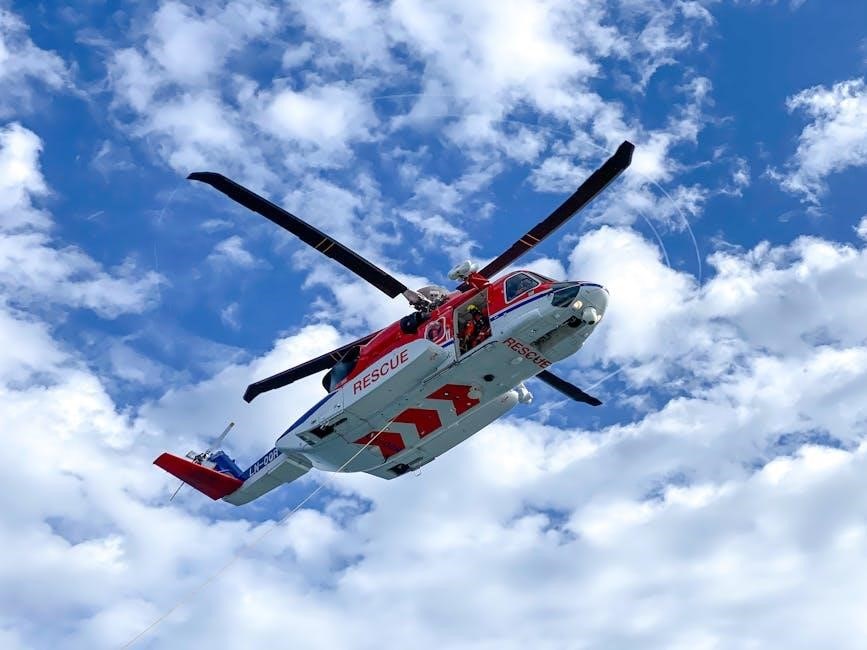
Construct landing platforms and refueling stations along the coaster track, allowing the helicopter to interact with the coaster cars. Integrate the helicopter into a rescue scenario, positioning it to “rescue” coaster passengers from a simulated emergency.
Utilize Knex gears and motors to synchronize the helicopter’s movements with the coaster’s operation. For example, the helicopter could follow a coaster car along a designated path. Consider building a hangar or maintenance bay integrated into the coaster’s station. Remember to ensure structural stability when combining these systems, and prioritize safe flight paths within the coaster environment.

Alternative Knex Helicopter Designs
Beyond the Sonic Boom! Explore diverse helicopter designs beyond the standard model. Experiment with coaxial rotors – two main rotors spinning in opposite directions – for increased stability and maneuverability, mimicking real-world designs.
Design a single-rotor helicopter with a prominent tail rotor, focusing on balancing lift and counter-torque. Investigate autogyro designs, utilizing an unpowered rotor for lift and a separate engine for forward thrust. Consider building a miniature tiltrotor aircraft, capable of vertical takeoff and horizontal flight.
Challenge yourself with a compound helicopter, incorporating wings for additional lift at higher speeds. Utilize different Knex pieces and connection methods to achieve unique aesthetic styles and functional features. Don’t be afraid to draw inspiration from real-world helicopters and adapt their designs to the Knex system. Prioritize structural integrity and aerodynamic principles for optimal performance.
Knex Database Querying with Aliases (Related to Knex Module)
Leveraging Knex for Data Management! When managing data related to Knex helicopter builds – parts lists, design variations, or user modifications – efficient database querying is crucial. Knex simplifies this process, especially when dealing with self-joins.
Imagine a ‘Parts’ table. If you need to compare parts used in different helicopter designs, you’ll alias the table. For example, knex('Parts') .select('p1.part_id', 'p2.quantity') .leftJoin('Parts as p2', 'p1.part_id', 'p2.part_id') allows comparison.
Aliases like ‘p1’ and ‘p2’ distinguish between instances of the same table within a single query. This is vital for complex relationships. Knex’s chained syntax makes building these queries readable and maintainable. Proper aliasing prevents ambiguity and ensures accurate data retrieval, essential for tracking helicopter build information and managing a Knex parts database.
Knex Connection Timeout Errors and Solutions
Addressing Database Connectivity Issues! While building your Knex helicopter database (for parts lists, build guides, or user designs), you might encounter “Timeout acquiring a connection” errors. These typically indicate the database is overloaded or Knex can’t establish a connection within the default timeframe.
Several factors contribute to this. A full connection pool, often due to many concurrent requests, is a common cause. Node 14 updates have reportedly introduced compatibility issues with Knex or the underlying database driver (like ‘pg’).
Solutions include increasing the connection pool size in your Knex configuration. Ensure your database server has sufficient resources. Verify database credentials and network connectivity. Adding .transacting(trx) to your queries can also resolve issues. Regularly monitor database performance and consider optimizing queries to reduce load. Addressing these points ensures a stable connection for managing your Knex helicopter project data.
Comparing Knex to Other Query Builders (e.g., Objection.js)
Evaluating Query Building Tools! When managing data related to your Knex helicopter builds – parts inventories, instruction databases, or user-submitted designs – choosing the right query builder is crucial. Knex is a raw query builder, offering granular control over SQL but requiring more manual effort.
Objection.js, built on top of Knex, presents a higher-level abstraction. It combines the benefits of Object-Relational Mappers (ORMs) without sacrificing Knex’s power. Objection.js simplifies common database operations, reducing boilerplate code and improving developer productivity.
While Knex excels in universal database support (MSSQL, MySQL, PostgreSQL, etc.), Objection.js provides features like model relationships and validation. If your helicopter project demands complex data interactions and rapid development, Objection.js might be preferable. However, for maximum control and portability across diverse databases, Knex remains a solid choice.
Knex Universal Database Support (MSSQL, MySQL, PostgreSQL, etc.)
Database Versatility for Helicopter Data! A key strength of Knex lies in its broad compatibility with numerous database systems. This is particularly valuable if your Knex helicopter project involves storing data across different platforms or anticipates future database migrations.
Knex seamlessly supports MSSQL, MySQL, PostgreSQL, SQLite3, and Oracle, offering a consistent API regardless of the underlying database. This eliminates the need to rewrite queries when switching between systems – a significant time-saver when managing helicopter design specifications, parts lists, or user build logs.
Compared to database-specific libraries like mysql2 (which focuses solely on MySQL), Knex provides a unified interface. While mysql2 might offer slight performance advantages in a MySQL-only environment, Knex’s flexibility is invaluable for projects requiring cross-database functionality. This adaptability ensures your helicopter data remains accessible and portable.
